Error
текст ошибки


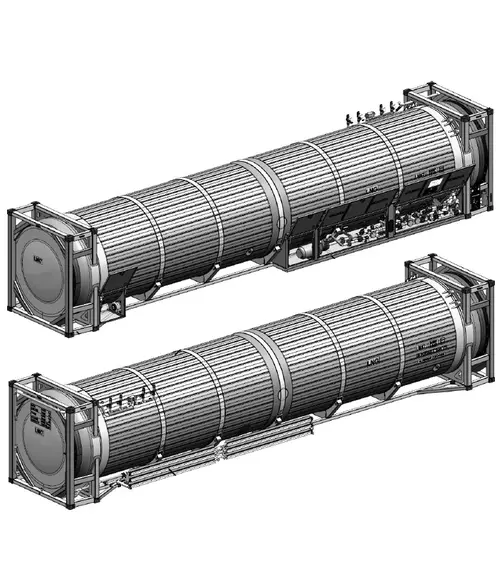
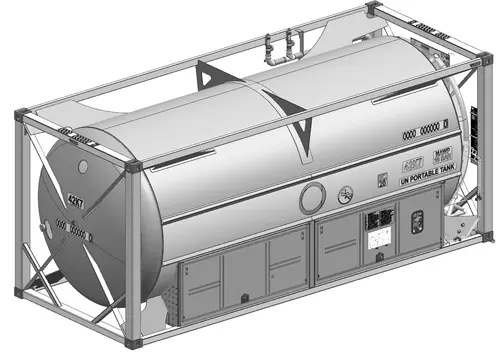
Tank container C75D43RS
The 43,300-litre T75 C75D43RS cryogenic tank container carries refrigerated liquefied oxygen, argon, methane and nitrogen. Its aluminium inner vessel is protected by multilayer vacuum insulation and an AISI 304L outer casing. Specifications follow RS certificate No. 26.04.01.00061.431 dated 7 September 2026.
About the product
- TypeT75
- Volume43,300 l
- Dimensions to ISO 668:2020, 1AA (40 ft)12192x2438x2591 mm
- Tank container tare weight11900 kg
- Maximum gross weight36000 kg
- Maximum payload24100 kg
- Operating pressure, MPa1
- Test pressure excluding vacuum, MPa1.43
- Operating temperature range-40℃ ... +50℃
- Inner vessel design wall temperature−196 °C
- ApplicationUN1977, UN1073, UN1951, UN1972
- ManufacturerSespel
- Inner vessel shell material1565ch, TU 1-2-668-2016
- Inner vessel head materialAMg3, TU 1-802-483-2024
- Outer casing materialAISI 304L ASTM A 240
Contact us for more information about this product.
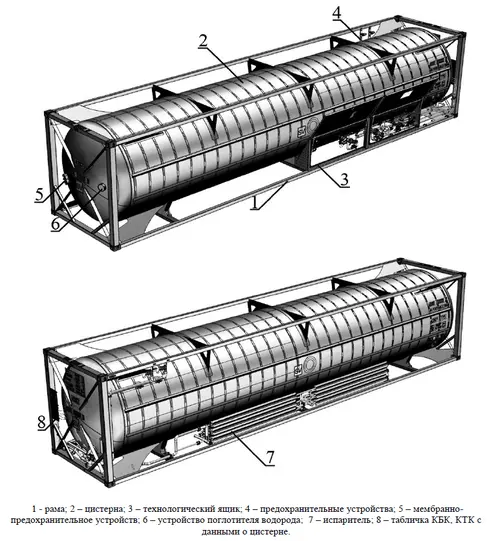 Tank container C75D43RS
Error
Description
C75D43RS is a forty-foot T75 cryogenic tank container with a capacity of 43,300 litres for refrigerated liquid oxygen, argon, methane and nitrogen. It is intended for road, rail and water transport, transfer operations and temporary storage. An aluminium inner vessel, multilayer vacuum insulation and an AISI 304L outer jacket form a double-wall structure for cryogenic cargo.
Selecting the cargo
The manual treats nitrogen, oxygen, argon and methane as separate working products. Selection requires checking fittings and equipment cleanliness for the chosen gas, the loading and discharge arrangement and cargo conditions before dispatch. Numerical specifications on this page follow the published 2026 certificate.
Double-wall construction
The inner shell is made of 1565ch aluminium alloy and the heads of AMg3. The outer casing shell and heads are AISI 304L stainless steel. The inter-wall space with multilayer vacuum insulation limits heat transfer to the cold cargo. The outer casing of this version is not aluminium.
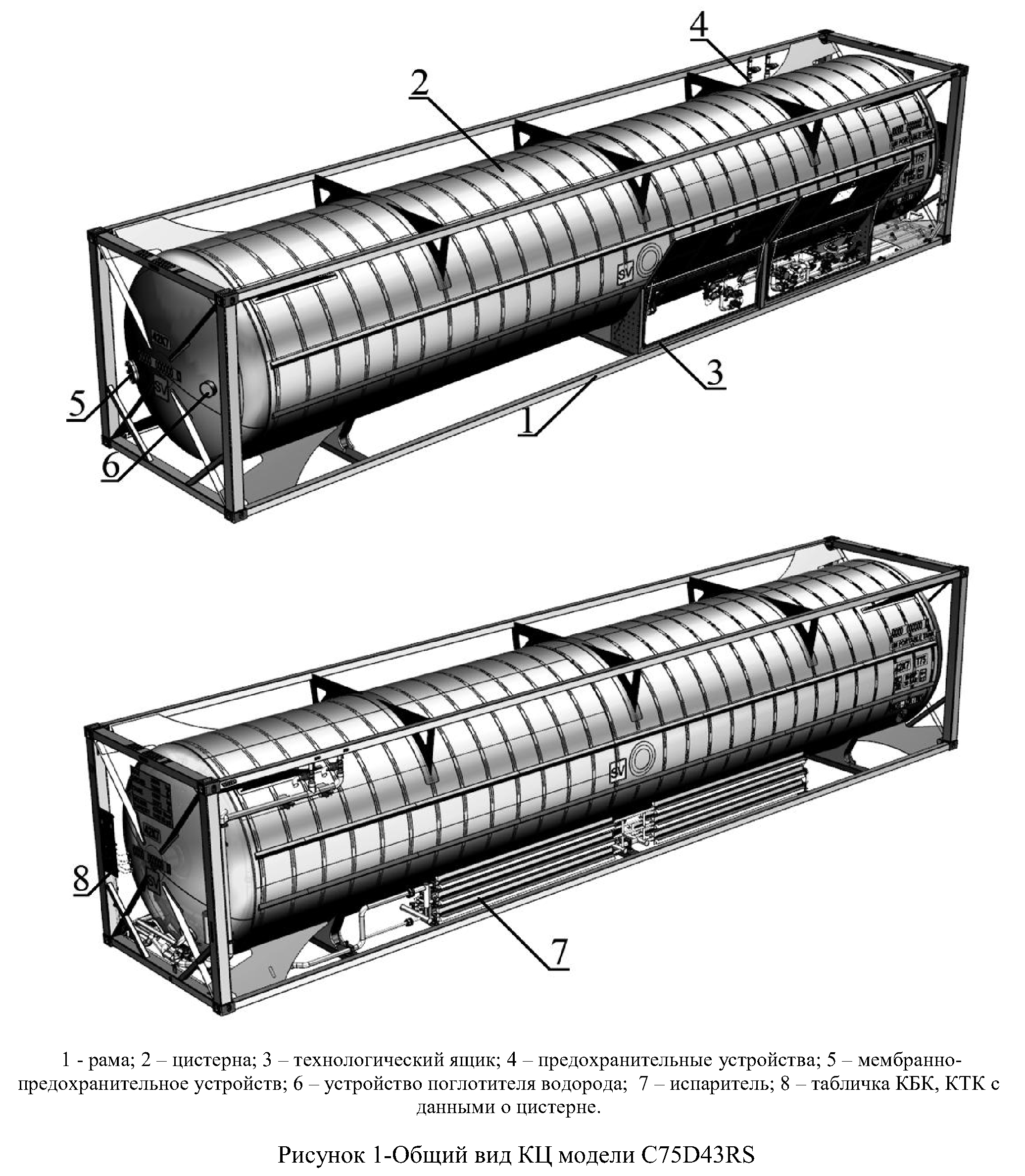
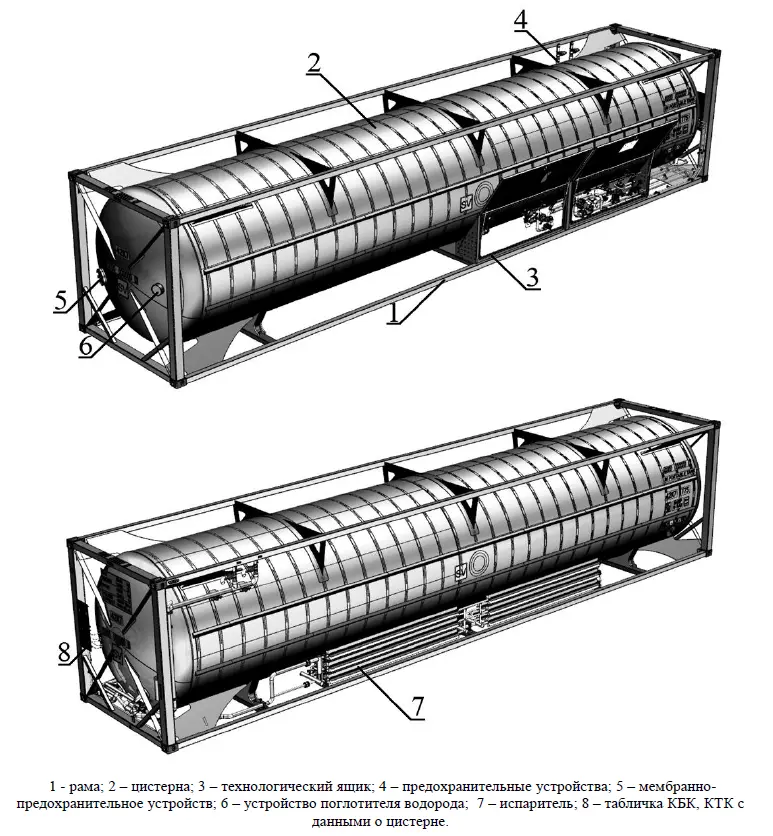
C75D43RS general arrangement — Figure 1 from the technical specifications
How multilayer vacuum insulation works
A vacuum space separates the inner vessel from the outer jacket. Reflective screens on the outside of the inner vessel are separated by layers of low-conductivity material. This system limits heat input to the product. The manual describes glass-reinforced insulating supports and cryosorptive carbon fabric intended to maintain the vacuum over time.
Insulation slows cargo warming and evaporation but does not eliminate heat input. Vacuum condition, the initial product state and journey duration therefore all matter for C75D43RS. Reference holding times differ by gas and are listed below together with filling conditions.
Main parameters and equipment
The 40-foot container measures 12,192 × 2,438 × 2,591 mm. The new certificates specify a 36,000 kg maximum gross mass, 11,900 kg tare and 24,100 kg payload. Maximum allowable working pressure is 1.0 MPa; test pressure excluding vacuum is 1.43 MPa.
The certificate specifies bottom discharge, a level gauge, remote control and two relief valves with a 1.0 MPa set pressure. Ambient operating temperature is −40 to +50 °C; the inner vessel design wall temperature is −196 °C. These temperatures describe different operating conditions.
Equipment compartment and cargo monitoring
Equipment for cargo transfer and leak-tight vessel closure is housed in the lower equipment compartment, on the left in the direction of travel. This arrangement protects fittings from mechanical damage and groups service points together. The compartment has provisions for a lock and customs seals.
The manual lists cryogenic shut-off valves, a pneumatically actuated valve, filling-control fittings and a differential-pressure level gauge. The level gauge helps monitor liquid quantity, while pressure instruments monitor the vapour space. Installed equipment and connections are matched to the individual container diagram and selected product.
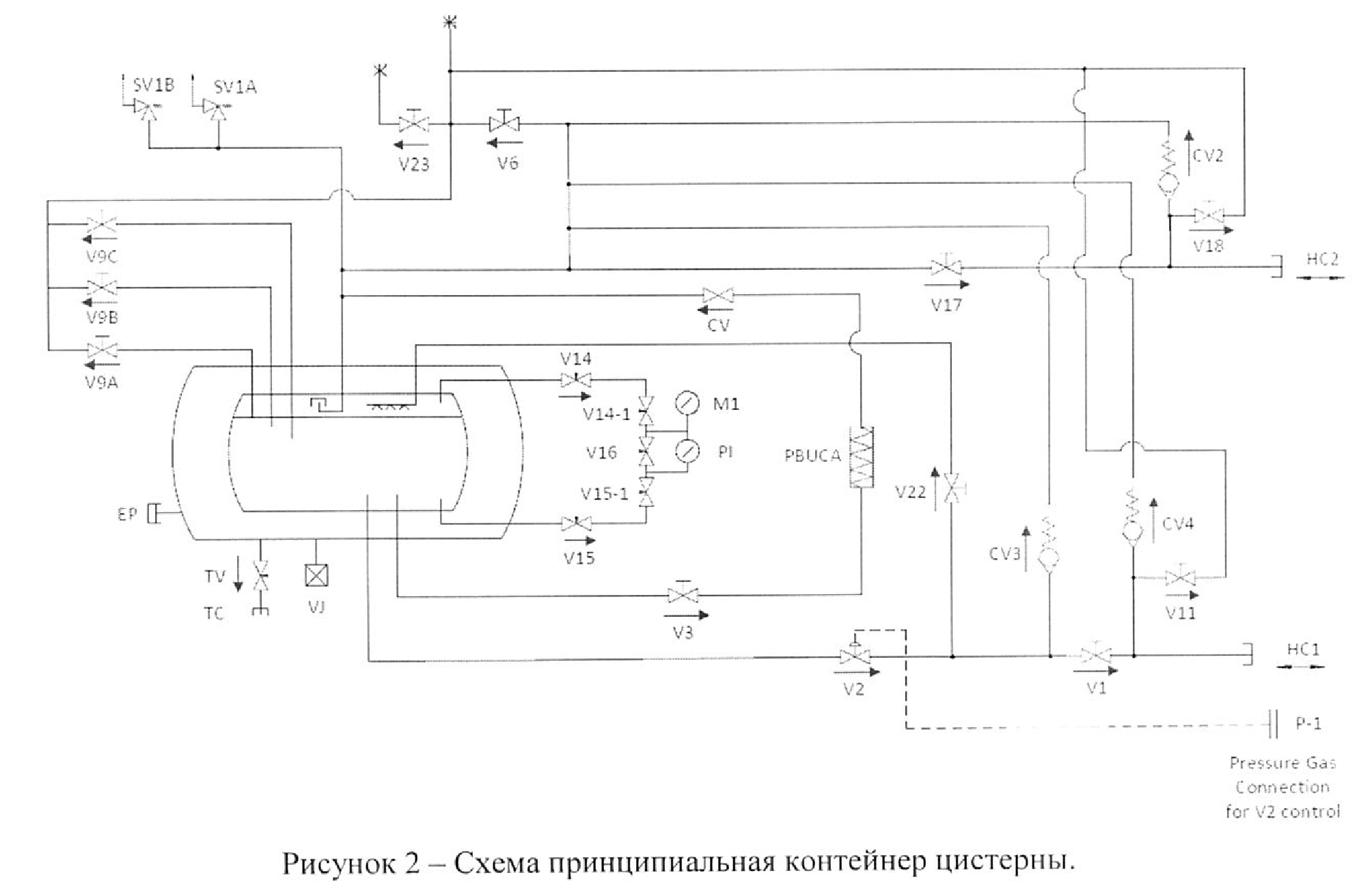
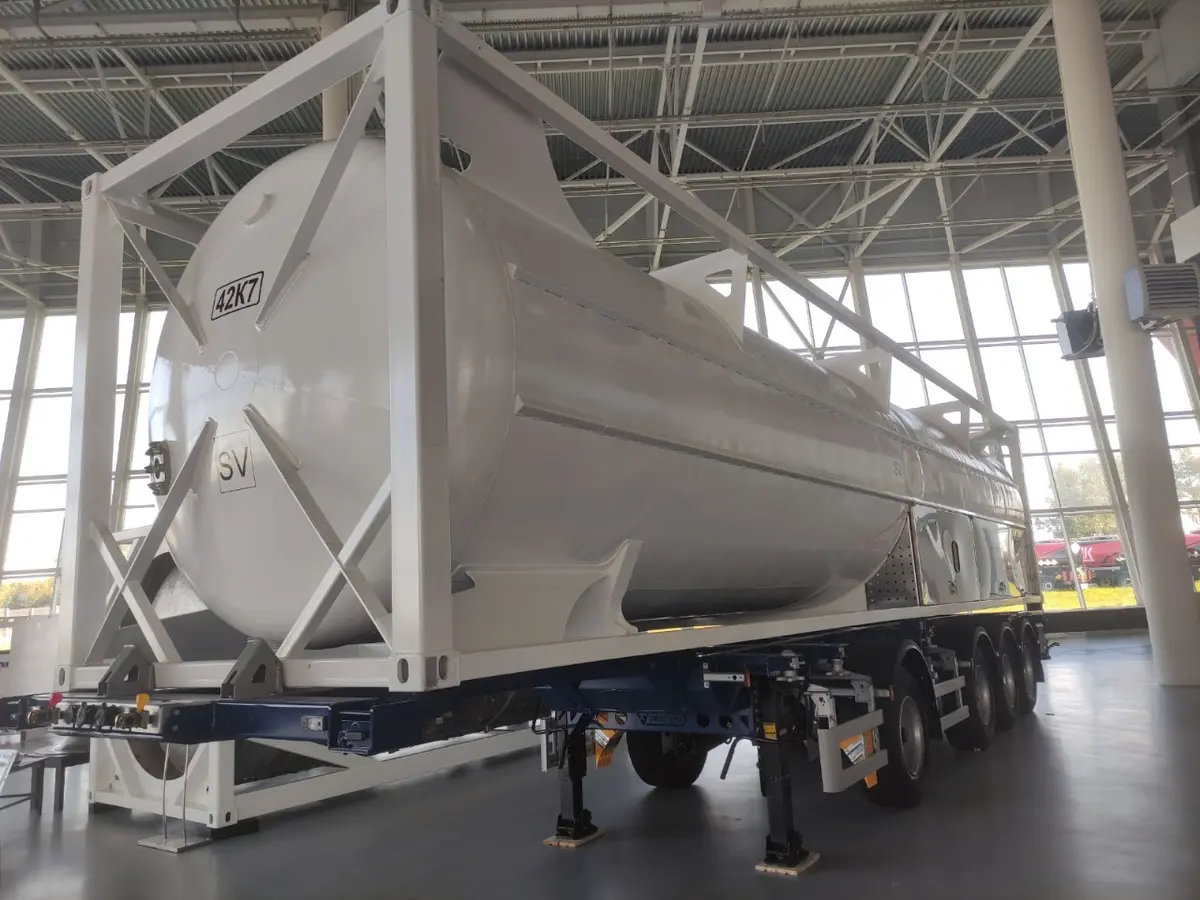
C75D43RS schematic diagram — Figure 2 from the operating manual
The figures show the design in the attached specifications and manual. Equipment fitted to an individual C75D43RS is confirmed by its passport and valid certificates.
Reference holding time
The values below come from certificate No. 26.04.01.00061.431: reference time until pressure reaches 1.1 MPa absolute at the specified initial filling. This is not a universal storage duration under all conditions. Voyage planning must consider actual cargo condition, initial pressure, filling and insulation condition.
| Cargo | Initial filling, maximum | Reference holding time, minimum |
|---|---|---|
| Oxygen UN 1073 | 49% | 31 days |
| Argon UN 1951 | 39% | 22 days |
| Methane UN 1972 | 82% | 53 days |
| Nitrogen UN 1977 | 68% | 30 days |
The certificates confirm the design type and its parameters. Permissible loading of an individual container also depends on its data plate, passport and the transport conditions for the selected cargo.
Transport without transferring the cargo
The 1AA envelope allows the container to be used in a transport chain involving several modes. Its welded frame consists of two end frames connected to the tank. Corner fittings are intended for lifting, securing on a vehicle and connecting stacked containers. When changing transport modes, the complete container is moved with the cargo retained in the inner vessel.
Preparation for oxygen, argon, methane or nitrogen
The list of approved gases does not mean the container can be switched between products without preparation. Before loading, vessel cleanliness, hose and seal compatibility, the condition of transfer and gas fittings, and earthing provisions are checked. Preparation follows the documentation for the selected gas; methane procedures must not be automatically applied to oxygen.
Measuring instruments and safety fittings are checked alongside the vessel and frame. The manual provides for checking instrument seals and verification dates, inspecting connections and checking markings. These requirements help plan container servicing at dispatch and receiving sites.
Certificates
| 26.04.01.00060.431 | CSC | Open | Unknown | |
| 26.04.01.00061.431 | Design type approval | Open | Unknown | |
| 26.04.01.00062.431 | Customs Convention on Containers | Open | Unknown |
Operating manual and technical specifications
The manual and technical specifications describe C75D43RS construction and servicing. Numerical characteristics, materials and safety-device configuration on this page follow the more recent certificates dated 7 September 2026. Where the attached document editions differ, the individual container passport and valid certificates apply.
| C75D43RS-0.0000-01РЭ | C75D43RS operating manual | Open | Unknown |
Compatible fittings
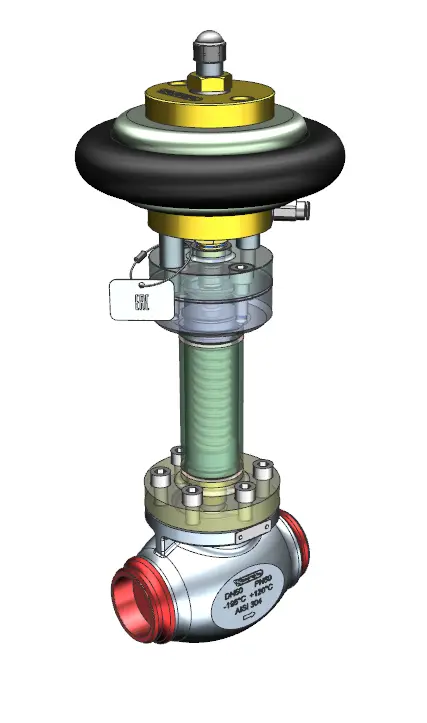
Shut-off valve 09240.5050.11
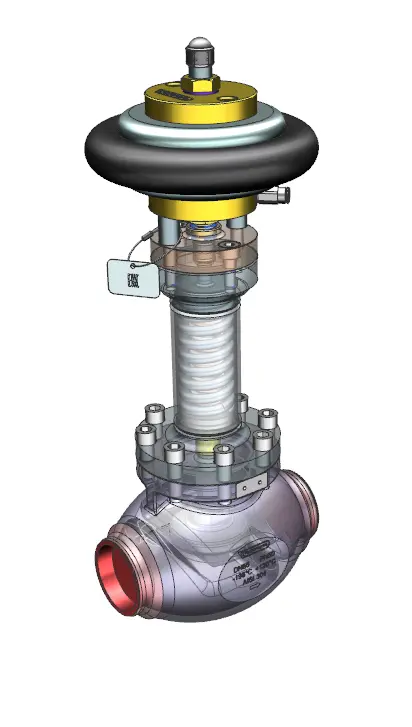
Shut-off valve 09240.6550.12
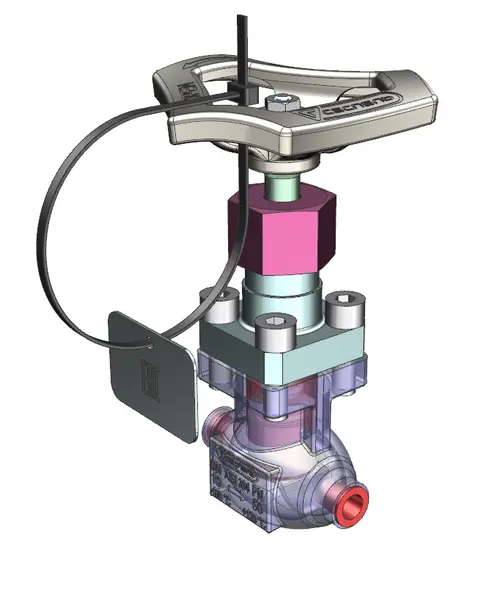
Shut-off valve 09241.1050.21.1
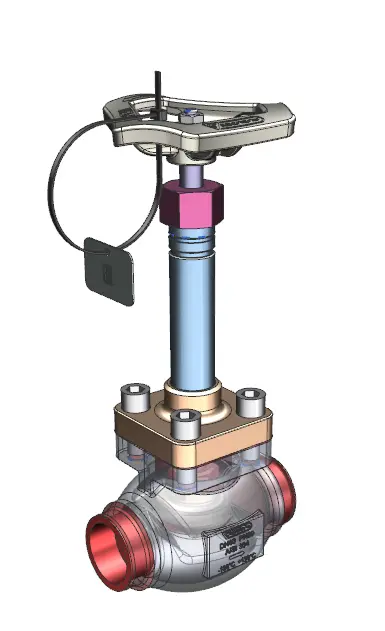
Shut-off valve 09241.1550.14.1
Shut-off valve 09241.2550.14.1
Shut-off valve 09241.4050.14.1
Shut-off valve 09241.5050.14.1
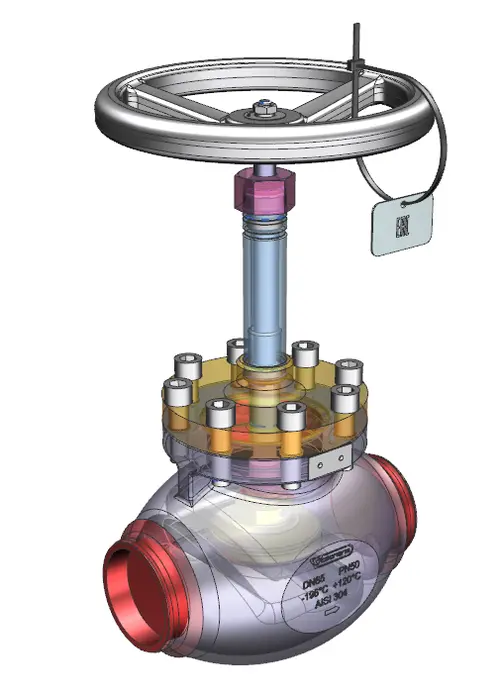
Shut-off valve 09241.6550.15.1
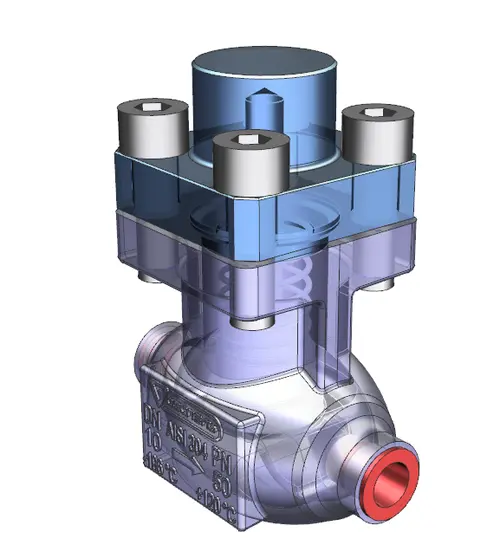
Check valve 09256
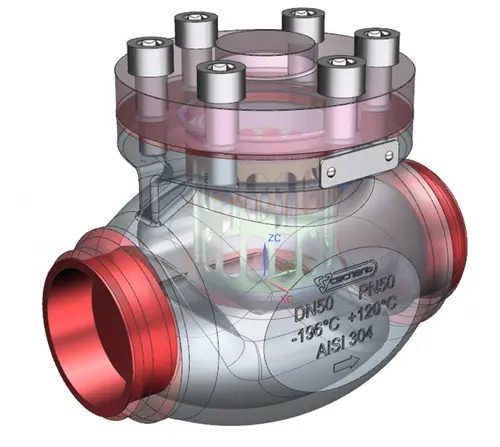
09259.5050.10 filter
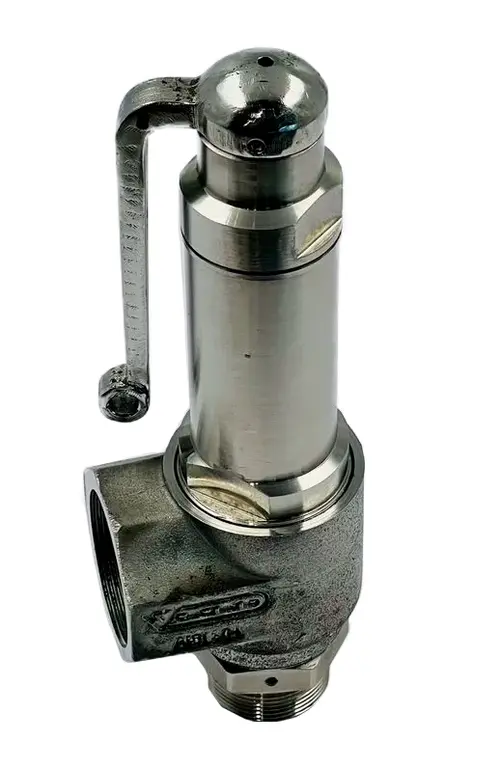
Safety valve 09260
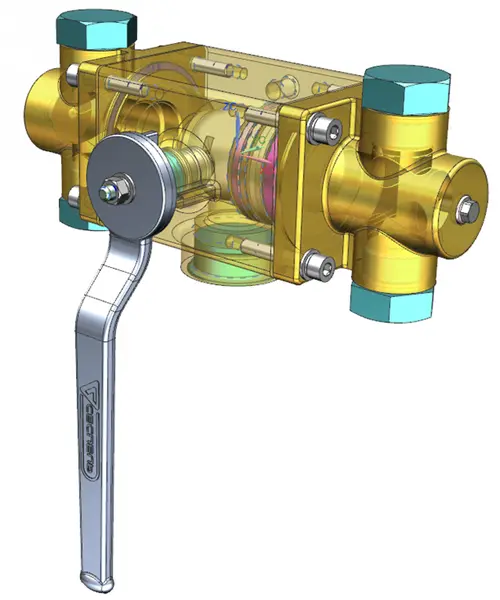
Changeover device 09263.3250.10
Frequently asked questions
Answers to questions about selecting and configuring a tank container.
Which gases are listed in the C75D43RS certificate?
Refrigerated liquefied oxygen UN 1073, argon UN 1951, methane UN 1972 and nitrogen UN 1977. Initial filling and reference holding time differ for each cargo.
What is the outer casing made of?
The 2026 certificates specify AISI 304L for the outer shell and heads. The inner vessel is aluminium: a 1565ch shell and AMg3 heads.
Why have tare and payload changed?
The page now follows the new certificates: 11,900 kg tare and 24,100 kg payload at 36,000 kg gross mass. Individual container parameters are checked against its passport.
Is 53 days a guaranteed duration for any voyage?
No. It is the reference value for methane at no more than 82% initial filling under the certificate conditions. Other gases and actual transport conditions require their own assessment.
Is one preparation procedure suitable for all four gases?
No. Nitrogen, oxygen, argon and methane require checking equipment compatibility and preparation for the selected product. Equal vessel volume does not imply equal loads or holding times.