Error
текст ошибки


Tank container C75A50
C75A50 is a 50,000-litre T75 cryogenic tank container for refrigerated liquefied methane UN 1972. The manual describes road transport, transfer operations and temporary storage of this cargo.
About the product
- TypeT75
- Volume50,000 l
- Dimensions to ISO 668:2020, 1AAA (45 ft)13716x2550x2743 mm
- Tank container tare weight13000 kg
- Maximum gross weight36000 kg
- Maximum payload19950 kg
- Operating pressure, MPa0.8
- Test pressure, MPa1.17
- Operating temperature range-40℃ ... +50℃
- Inner vessel wall temperature-196℃ ... +20℃
- ApplicationUN1972
- ManufacturerSespel
Contact us for more information about this product.
 Tank container C75A50
Error
Description
C75A50 is a 50,000-litre T75 cryogenic tank container for road transport of refrigerated liquid methane UN 1972, transfer operations and temporary storage. It is 13,716 mm long and features a double-wall aluminium vessel with multilayer vacuum insulation and an atmospheric pressure-building vaporiser for product withdrawal.
Aluminium vessel inside a vacuum jacket
The inner vessel shell is made of 1565ch aluminium alloy and its heads of AMg3. The outer vessel uses AW-6082-T6 aluminium profiles. The inner vessel rests on glass-reinforced insulating supports, with multilayer vacuum insulation between the vessels. This arrangement reduces heat input to methane during transport and stops.
The manual provides for a thermocouple vacuum gauge. The condition of the insulation space affects heat input and pressure rise in the cargo vessel. Multilayer vacuum insulation preserves the cold product, while the atmospheric vaporiser has a different function: helping build pressure during withdrawal.
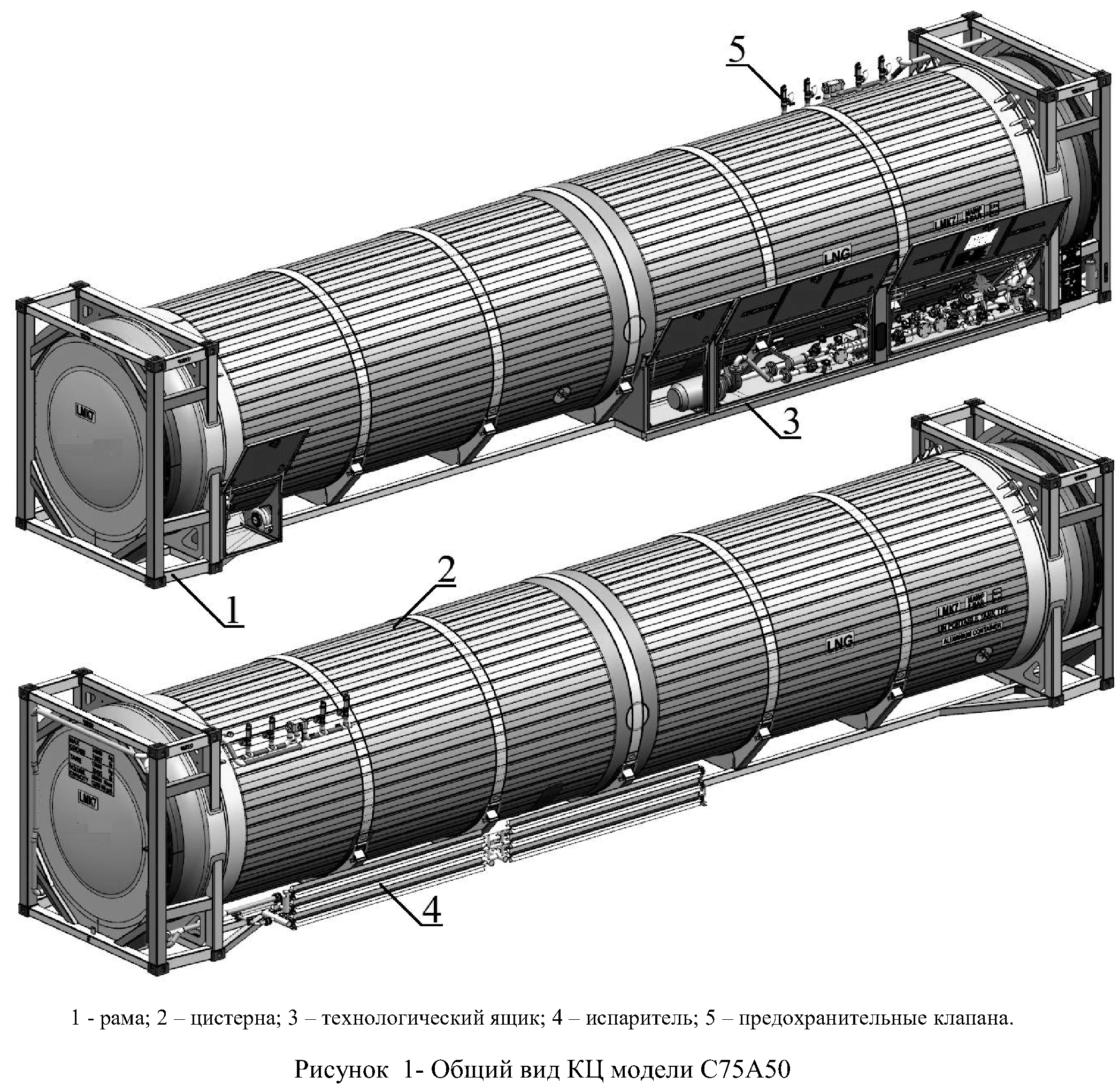
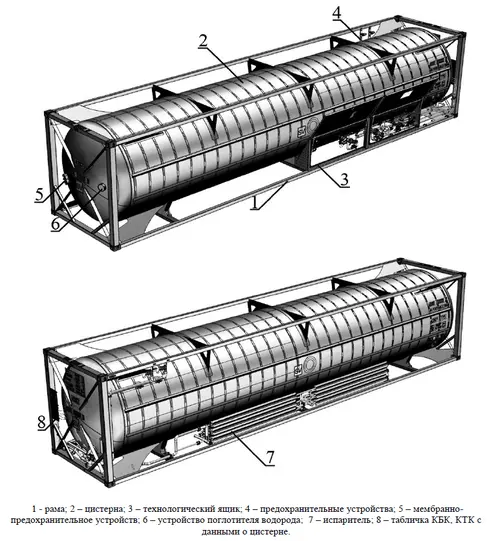
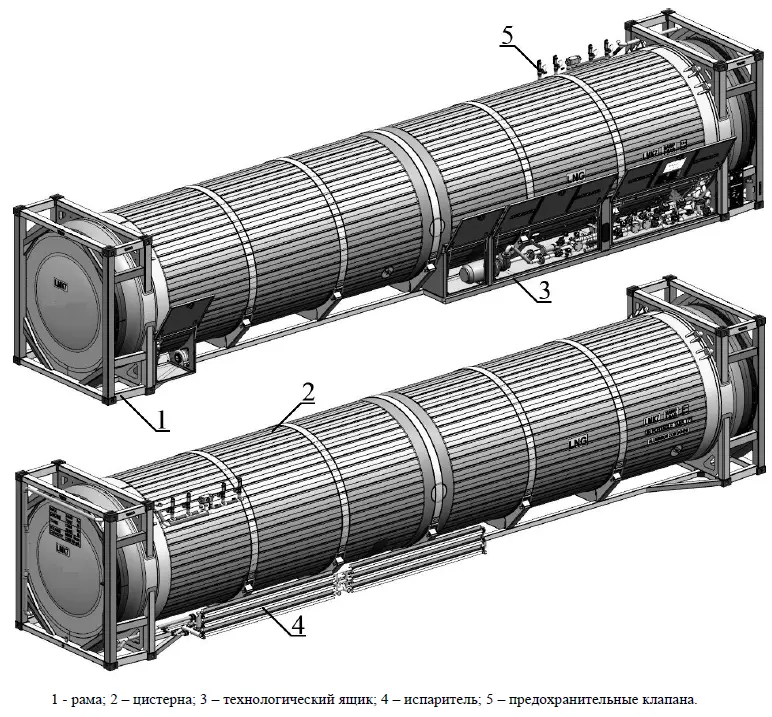
C75A50 general arrangement — Figure 1 from the technical specifications
Filling, discharge and atmospheric vaporiser
The technical specifications provide for top filling and bottom discharge. With the appropriate equipment, transfer may use pressure differential or a pump. A cryogenic centrifugal pump is listed as an option; its inclusion and characteristics are agreed separately when ordering.
The atmospheric vaporiser is located low on the right-hand side in the direction of travel. The manual identifies its purpose as increasing pressure during cryogenic product withdrawal. Cargo-transfer and vessel-isolation equipment is grouped in the lower compartment on the left. The compartment protects fittings from mechanical impacts and has provisions for a lock and customs seals.
Filling control and vessel protection
The specified equipment includes low-temperature shut-off and check valves, a pneumatically actuated valve, filling-control fittings, a pressure gauge and a differential-pressure level gauge. Level and pressure monitoring track cargo conditions during filling and discharge. Pressure instruments can be checked and isolated using the provided arrangement.
The specifications require independent shut-off devices in series on filling and discharge lines, with remote operation of the quick-closing device. Safety valves are located at the top of the vessel in the vapour-space region. Their settings and configuration follow the permissible pressure of the individual tank container.
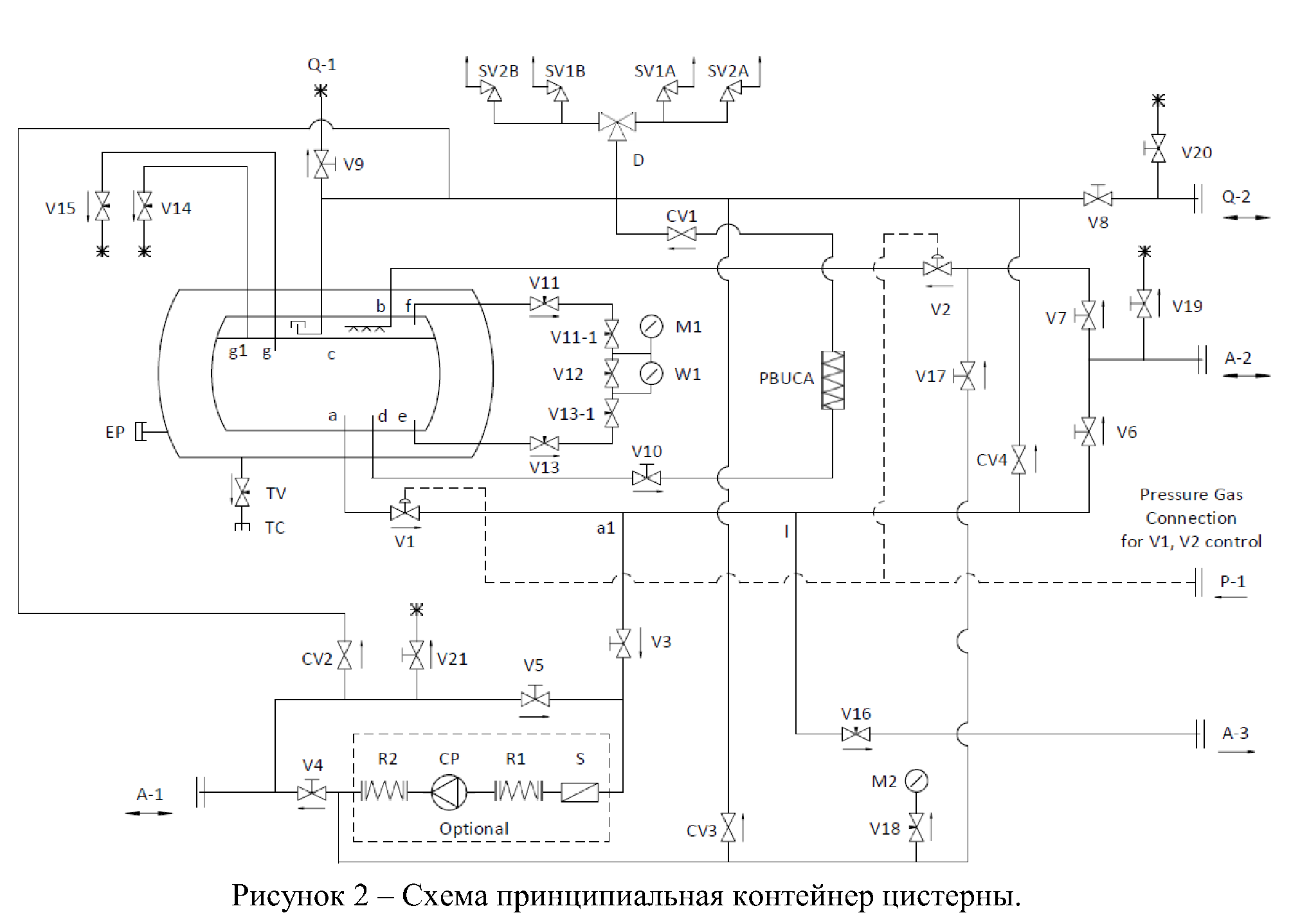
C75A50 schematic diagram — Figure 2 from the operating manual
The diagram is taken from the attached manual edition. The configuration of an individual C75A50, including the pump branch, is confirmed when ordering; the pump is optional.
50,000 litres and permissible methane mass
For the version described in the technical-specification table, working pressure is 0.8 MPa, test pressure 1.17 MPa, tare no more than 13,000 kg and gross mass no more than 36,000 kg. Maximum methane cargo mass is 19,950 kg. This is a separate cargo limit and must not be replaced by the arithmetic difference between gross mass and tare.
Actual loading depends on methane density and initial state, the permissible filling ratio and planned journey duration. Holding time depends on these conditions and heat input. A geometric capacity of 50,000 litres does not authorise completely filling the vessel with liquid.
Frame and vehicle installation
C75A50 measures 13,716 × 2,550 × 2,743 mm. The 09G2S steel frame consists of two end structures connected to the outer vessel. Corner fittings provide lifting and securing points. The frame has a document holder and an earthing connection. Vehicle selection takes account of dimensions, loaded container mass and securing-point locations.
C75A50 documentation
The characteristics on this page follow the technical-specification table for the 0.8 MPa version. The attached manual edition states different pressure and tare values. Configuration and operation follow the individual container passport; parameters from different document editions must not be combined.
| С75А50-0.0000-01РЭ | C75A50 operating manual | Open | Unknown |
Compatible fittings
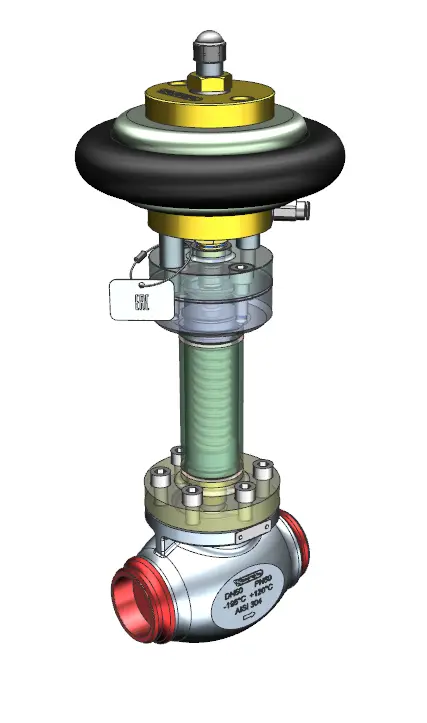
Shut-off valve 09240.5050.11
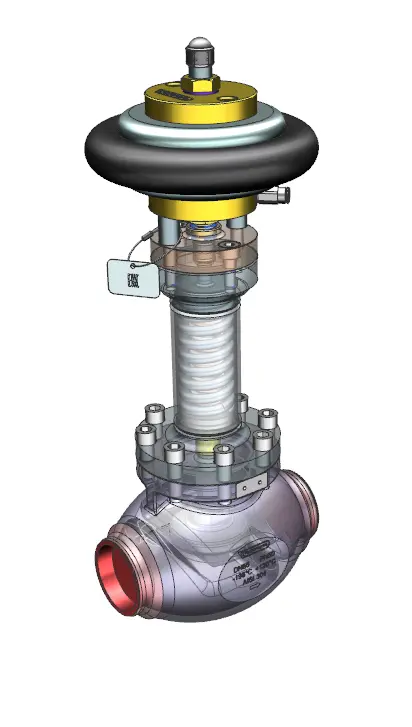
Shut-off valve 09240.6550.12
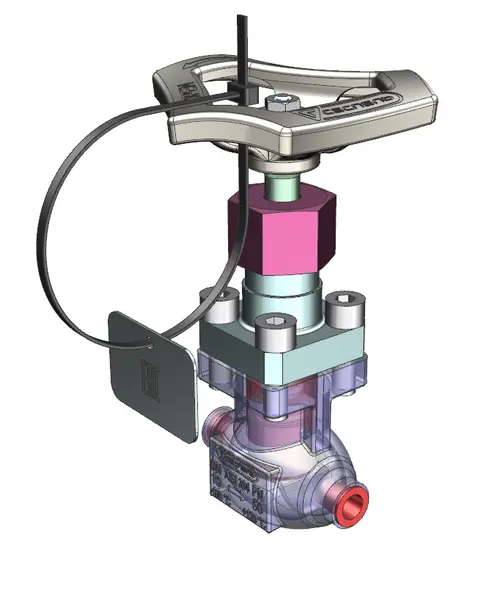
Shut-off valve 09241.1050.21.1
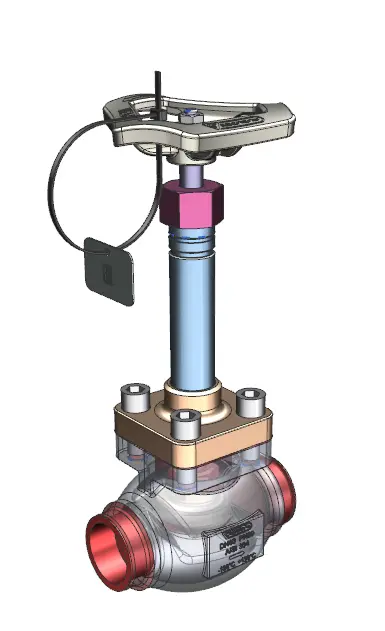
Shut-off valve 09241.1550.14.1
Shut-off valve 09241.2550.14.1
Shut-off valve 09241.4050.14.1
Shut-off valve 09241.5050.14.1
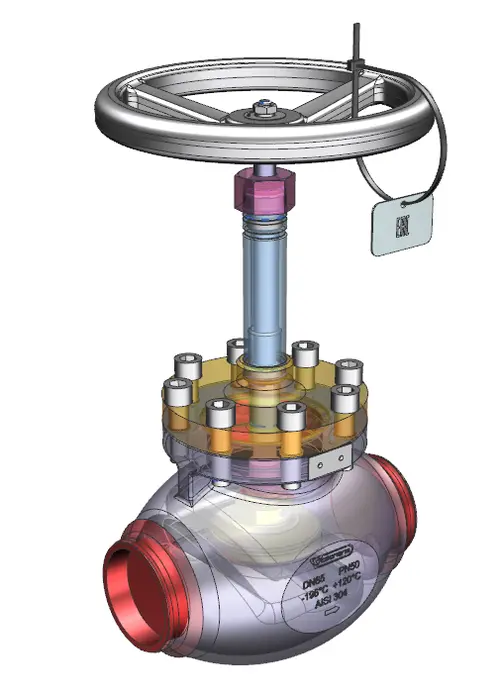
Shut-off valve 09241.6550.15.1
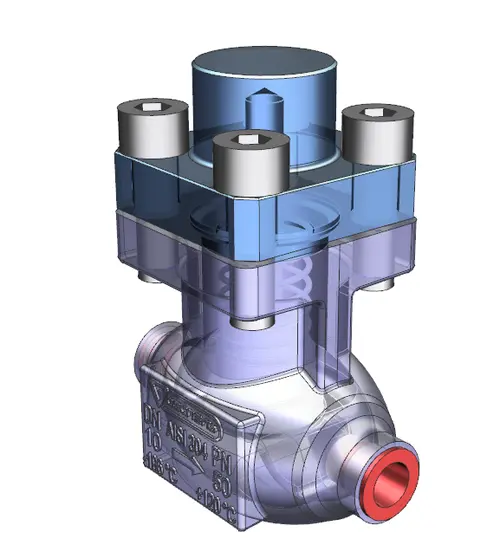
Check valve 09256
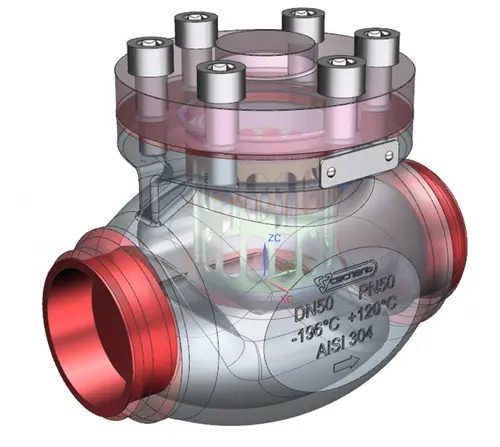
09259.5050.10 filter
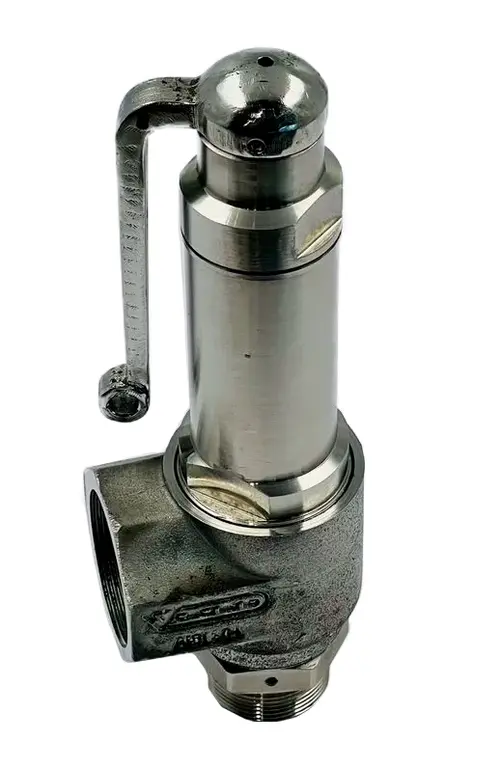
Safety valve 09260
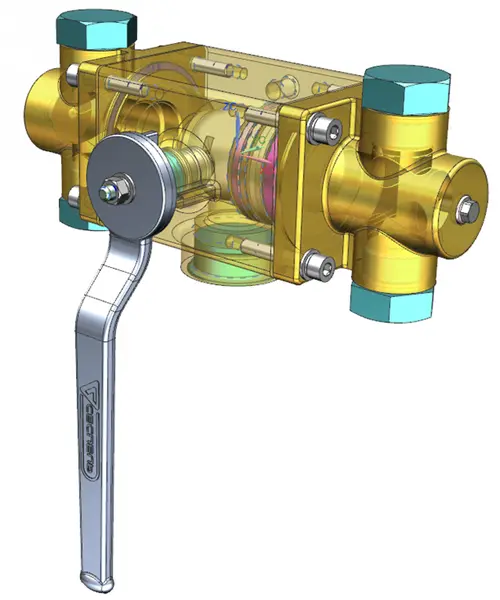
Changeover device 09263.3250.10
Frequently asked questions
Answers to questions about selecting and configuring a tank container.
What is C75A50 designed for?
C75A50 is a 50,000-litre T75 cryogenic tank container for refrigerated liquefied methane UN 1972. The manual describes road transport, transfer operations and temporary storage of this cargo.
Construction and insulation: what matters?
The inner vessel and outer shell form a double-wall structure with multilayer vacuum insulation that reduces heat ingress. The equipment includes a service box, vaporiser and safety valves.
Selecting transport conditions: what should be checked before ordering?
The permitted methane load and holding time depend on initial cargo conditions, filling level and the parameters of the specific version. Geometric capacity is not the payload mass. Transport conditions and configuration are agreed using the container passport.
Can the load be determined from capacity alone?
No. Product density and condition, permitted filling level and the individual container gross weight must be checked. Geometric capacity describes vessel volume, not a universal cargo mass.