
First Soyuz-5 launch demonstrates the effectiveness of Sespel’s welding technology
On 30 April 2026, the Soyuz-5 medium-lift launch vehicle made its first flight from Baikonur Cosmodrome. The launch proceeded normally as part of flight development testing. A key engineering feature is the use of friction stir welding instead of conventional argon arc welding. Sespel manufactured the equipment for this process for Progress JSC. The rocket features the world’s most powerful liquid-propellant engine and a payload capacity of 17 tonnes. The launch opens new opportunities for Russian spaceflight and international cooperation under the Baiterek project.
On 30 April 2026 at 21:00 Moscow time, Russia’s new Soyuz-5 medium-lift launch vehicle made its first flight from Site 45 at Baikonur Cosmodrome. The launch was a key stage in flight development testing and proceeded normally, according to the Roscosmos press service.
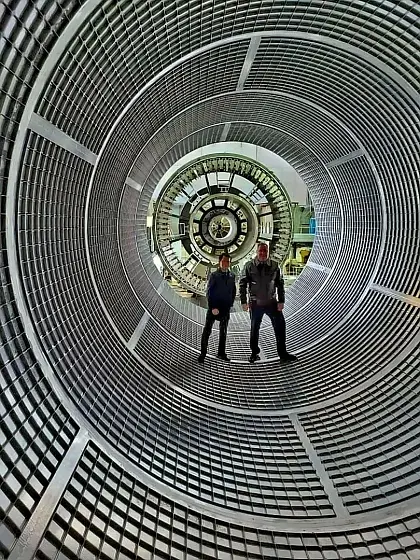
One of the project’s main technological innovations is friction stir welding (FSW). Replacing conventional argon arc welding, this process offers several advantages: more reliable joints, a several-fold increase in production speed and improved structural strength of the rocket.
To introduce the new process, Sespel developed and manufactured three specialised friction stir welding systems to a bespoke order from Progress JSC. The equipment was used to manufacture the first and second stages of Soyuz-5, both of which performed without issues during the flight. A mass-and-size payload simulator was placed on the planned suborbital trajectory before a controlled descent into a pre-closed area of the Pacific Ocean.
Roscosmos Director General Dmitry Bakanov described the launch as special, emphasising that the rocket uses the world’s most powerful liquid-propellant engine. Soyuz-5 has a payload capacity of 17 tonnes. Its high payload insertion accuracy will significantly reduce launch costs per unit of payload, improving the economics of space missions.
The rocket was developed under the joint Russian-Kazakh Baiterek project: Russia developed the launch vehicle, while Kazakhstan modernised the launch infrastructure. The project will create jobs in both countries and strengthen cooperation. During development, the rocket was variously known as Energia-K, Phoenix and Irtysh. In Kazakhstan, it is known as Sunkar, meaning “Falcon”.
The first launch was originally planned for the second half of 2022, but was postponed several times for additional checks of onboard systems and ground equipment. By the end of 2025, the rocket was fully assembled and ready for launch. The successful test demonstrates the quality of Russian engineering and opens new prospects for domestic spaceflight, particularly when combined with advanced manufacturing processes such as the friction stir welding introduced by Sespel.