Error
текст ошибки


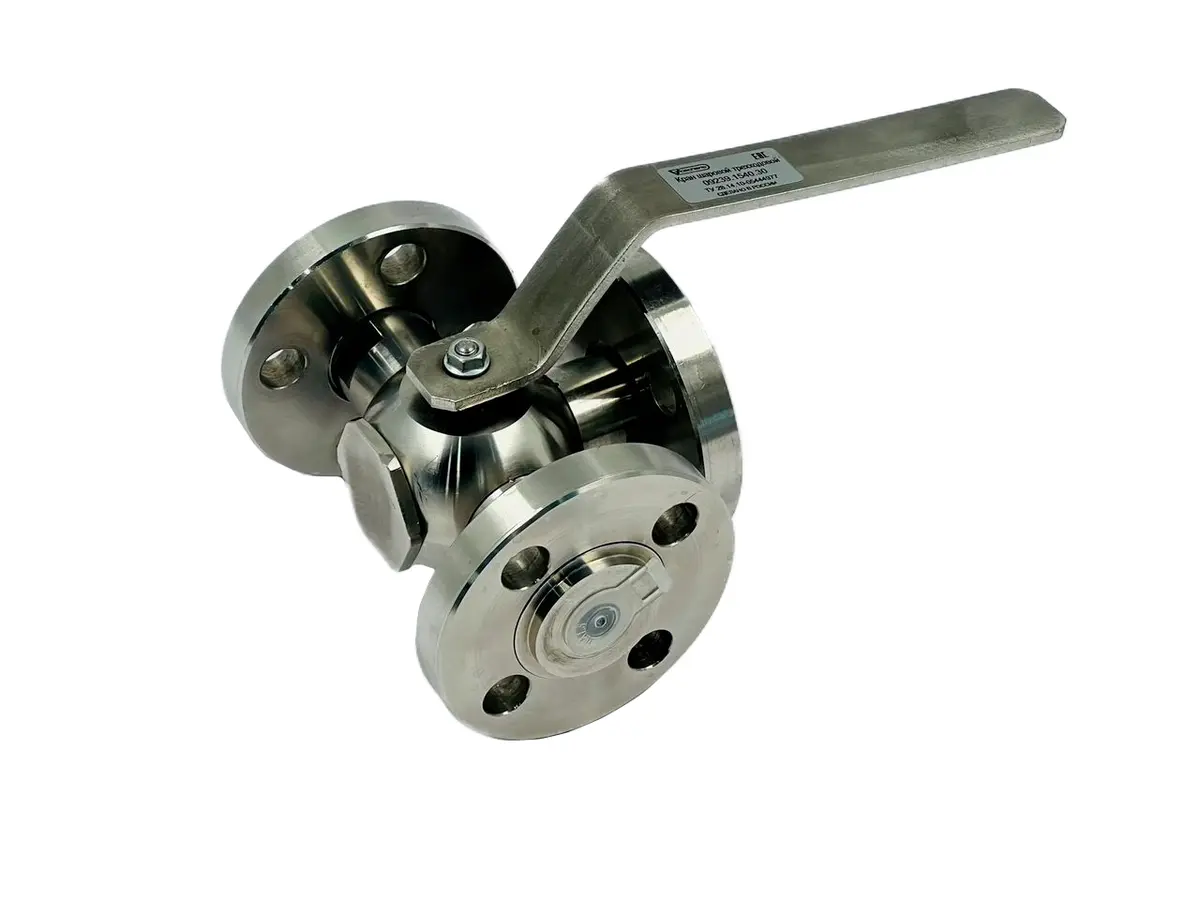
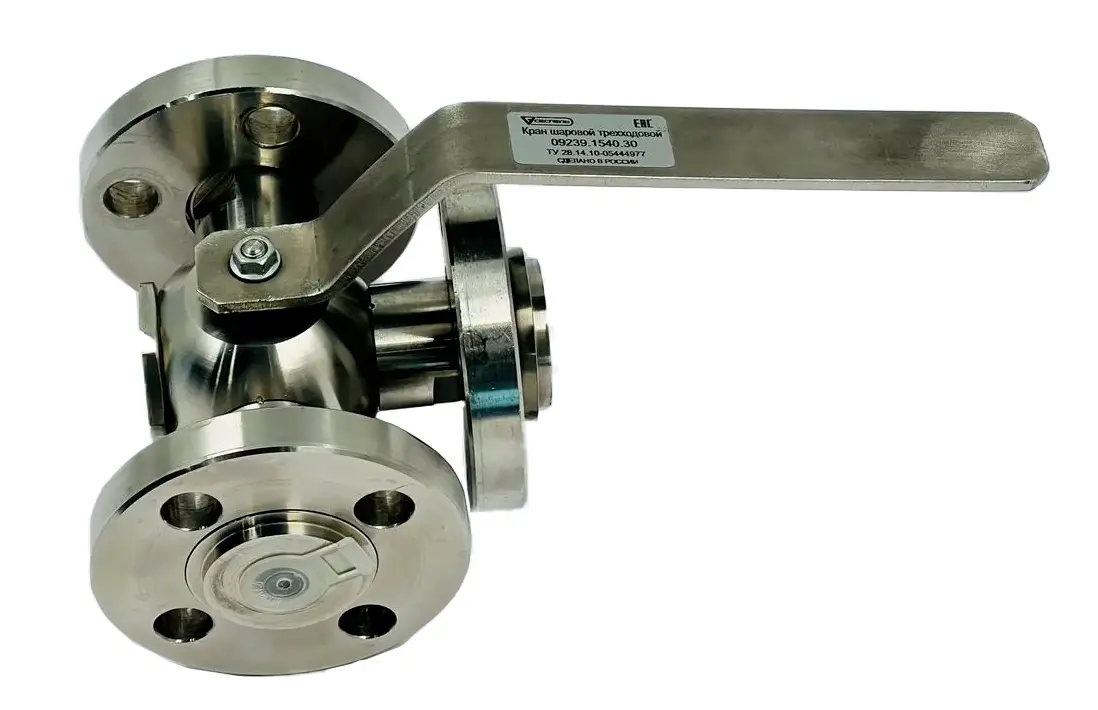
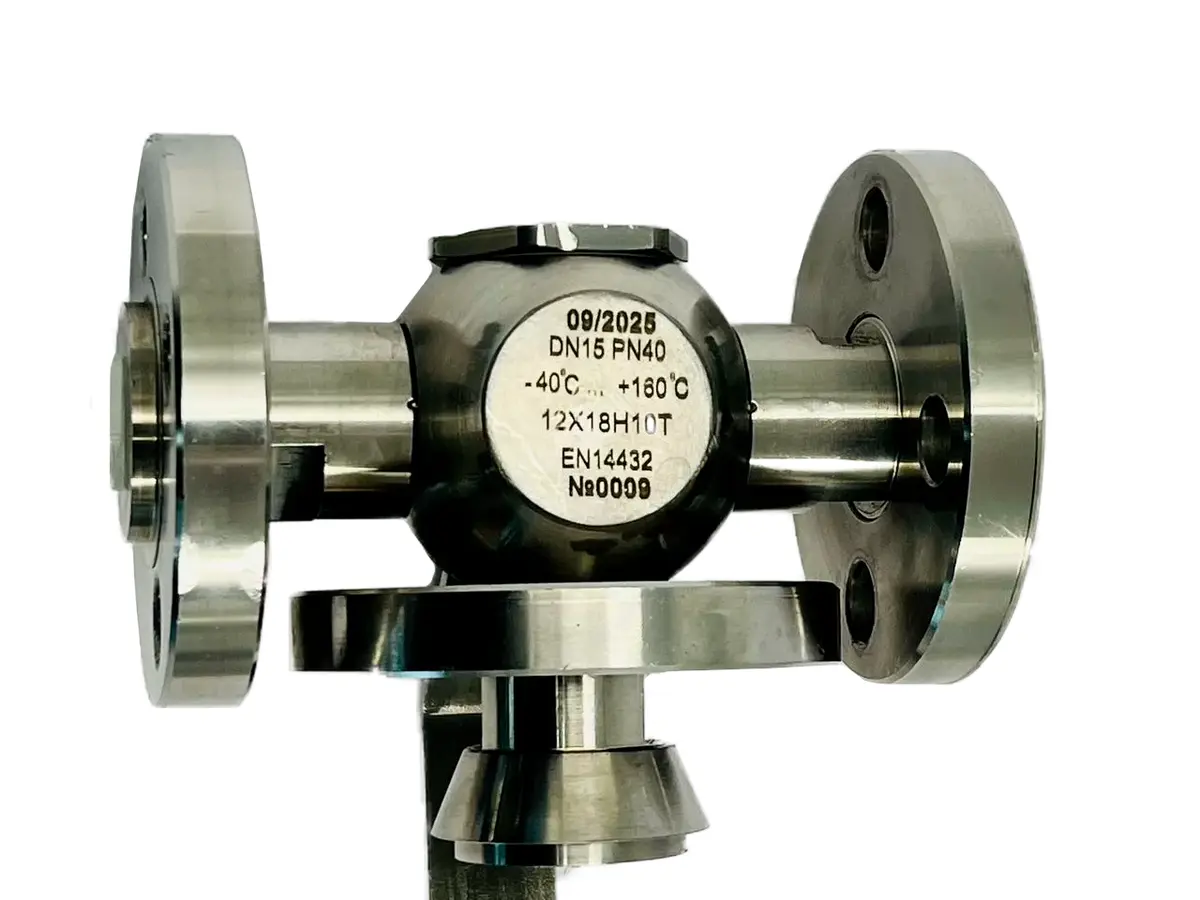
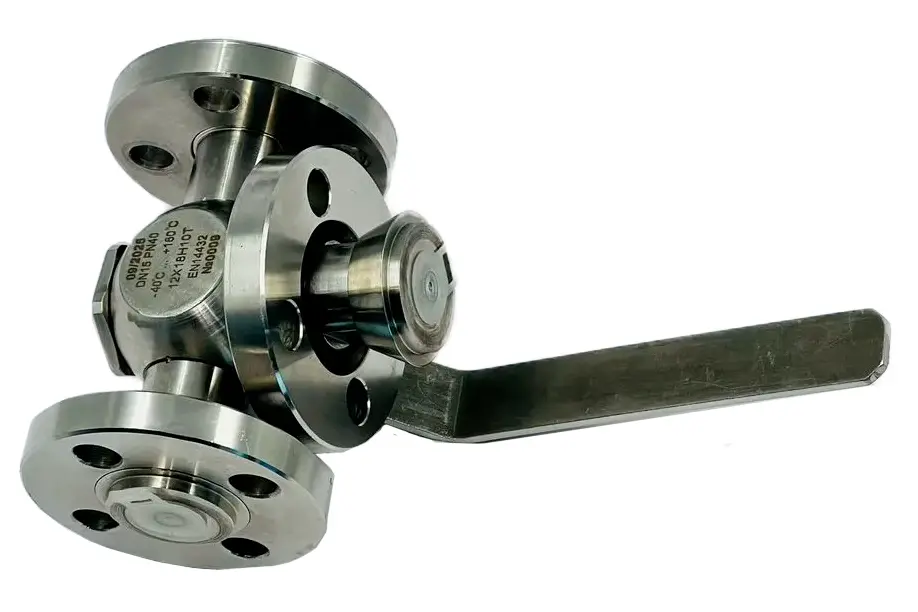
Three-way ball valve 09239.1540.30
About the product
- VersionFor tank containers; not for road tankers
- Nominal boreDN 15 mm
- Weight3.8 kg, maximum
- Body materialsteel 12Kh18N10T GOST 5632
- Maximum operating pressure, MPa4.0
- Operating temperature-60 ... +160℃
- Climatic versionV1 climatic version (−60°C to +50°C)
- CertificationRussian Maritime Register of Shipping, TR CU 010/032, ADR, IMDG Code, RID
- Barcode09239.1540.30
- ManufacturerSespel
Contact us for more information about this product.
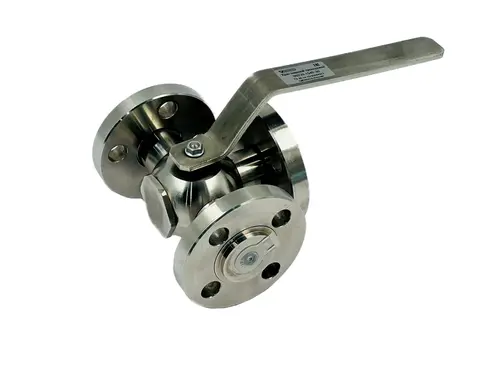 Three-way ball valve 09239.1540.30
Error
Description
The 09239.1540.30 valve brings three pipeline directions together in a single DN15 shut-off assembly. Rotating the ball changes the connections between the lines: the medium flows through the ball passages, with the position selected using the handle. This version is intended for tank container piping systems, not road tankers.
Operating manual 09.239-0120RE describes the three-way valve as a shut-off device for sealing a vessel against its vapour–air mixture. The technical specifications cover liquid and gaseous media. Within a tank container system, each connection is assigned according to the piping diagram; having three ports does not by itself determine which line is the inlet, outlet or switched line.
Three connections and a spherical plug
The valve consists of a body and connecting fittings surrounding a spherical plug with circular through-passages. The handle transmits rotation through the spindle. As the ball turns, its passages align with different connections, allowing the flow path to be selected without rearranging the pipework. Internal PTFE rings and a PTFE seal provide sealing.
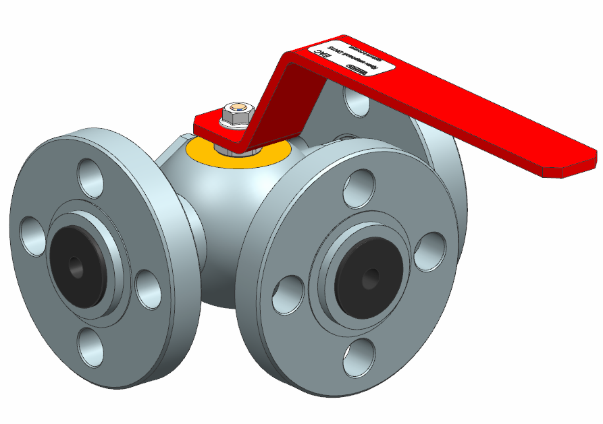
General view of the DN15 three-way valve — Figure 1 from the operating manual
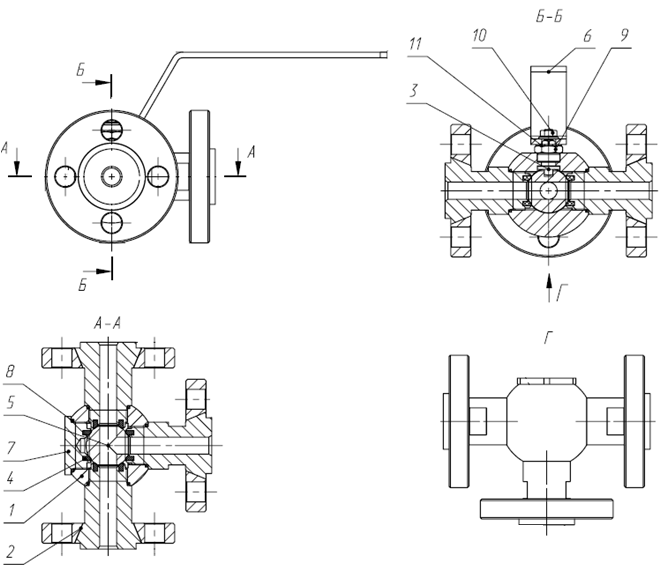
DN15 valve cross-sections and components — Figure 2 from the operating manual
The cross-section identifies: 1 — body assembly; 2 — fitting assemblies; 3 — spindle; 4 — internal PTFE rings; 5 — spherical plug; 6 — handle; 7 — blanking plug; 8 — PTFE seal; 9 and 10 — nuts; 11 — washers. The drawing distinguishes the flow-path components from the mechanism that transmits rotation.
Reading the handle positions
The handle is marked with a diagram of the ball passage orientation. The manual shows four positions: all three directions connected, one side connected to the lower port, a straight passage between the side ports, and the other side connected to the lower port. This shows the passage layout, not a mandatory flow direction in the installed pipeline.
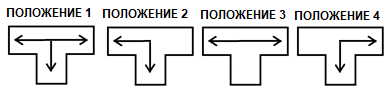
Four passage positions — Figure 3 from the operating manual
The manual specifies turning the handle through 90° or 180° to open one or two directions respectively. Before switching, match the handle markings to the tank container piping diagram. Extension levers must not be used to increase torque, and the valve must not be left in an intermediate position for more than 24 hours.
Materials, media and DN15 parameters
- Nominal boreDN15
- Body components12Kh18N10T stainless steel
- Sealing elementsPTFE rings and seal
- Medium temperature−60 to +160 °C
- Valve weightNo more than 3.8 kg
- Seat tightnessClass A to GOST 9544-2015
- Nominal pressure in the DN15 family manual and specificationsPN 6 MPa
The product specifications retain a maximum working pressure of 4 MPa for version 09239.1540.30. PN 6 MPa is stated in the DN15 three-way valve family documents, which do not separately identify this full product code. It does not justify increasing the working pressure of an individual valve: verify permissible conditions against its passport and markings. Test pressures in the specifications are not operating pressures either.
The documents list petroleum products, LPG, odorant, ammonia, carbon dioxide, acid and alkali solutions, alcohol, water and food media. This list does not imply compatibility with every composition or concentration. Selection must consider the resistance of 12Kh18N10T steel and the seals at the required temperature; the manual expressly prohibits media that attack the body materials.
Why passage cleanliness and ring condition matter
Sand, scale and weld spatter can scratch the spherical plug and PTFE rings. The manual identifies this damage, along with ring wear, as causes of seat leakage. If leakage is detected, first verify that the valve is actually closed, then establish the cause. Operating the valve with leaking connections is prohibited.
Inspect the valve exterior and mountings at least monthly. Scheduled maintenance includes checking for leaks and correct switching, and cleaning the valve. The manual recommends replacing the sealing rings every 12 months; a leaking seal must be replaced. Dismantling or repair under pressure is prohibited, and failed components must be replaced by an organisation with the appropriate competence and repair authorisation.
DN15 three-way valve documents
| 09.239-0120РЭ | DN15 three-way ball valve operating manual | Open | Unknown |
Frequently asked questions
Answers about the purpose and selection of this tank-container version.
How does a three-way valve differ from a two-way valve?
It can switch connections between different flow directions. Select positions using the passage diagram on the handle and the piping arrangement.
Can the valve handle any aggressive medium?
No. Compatibility depends on the actual medium, its temperature, and the body and seal materials. Stainless steel does not provide universal chemical resistance.
Is an external actuator required?
This valve is manually operated by its handle. Handle extensions must not be used to increase force.
How is the allowable pressure determined?
Use the passport and markings of the specific version. A family nominal rating or test pressure does not replace the supplied valve’s allowable working pressure.