Error
текст ошибки


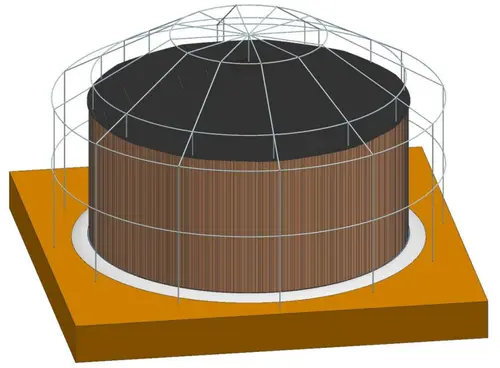
Steel tanks
Sespel RVS / RVSP / RVSPK tanks are a reliable solution for storing crude oil and petroleum products. Steel structures with corrosion protection, safety systems and customised modifications for your project. Capacities from 1,000 to 50,000 m³.
About the product
- DurabilityUp to 30 years of operation
- Leak-tightnessFull compliance with GOST 31385
- FlexibilityOptional heating, level sensors and thermal insulation
- Environmental performanceFloating covers and shields reduce evaporation by 90%
- ManufacturerSespel
Contact us for more information about this product.
 Steel tanks
Error
Description
Tank selection depends on the petroleum products stored, their properties and the operating conditions. Chemical composition and aggressive constituents determine the tank material and any additional coating. Viscous products may require heating to enable pumping. Petroleum storage vessels may be metal, reinforced concrete or non-metallic polymers. Most crude oil and petroleum product tanks use 4–10 mm steel plate for strength, temperature resistance and durability. Teardrop and spherical vessels are used at high pressures.
Tank types
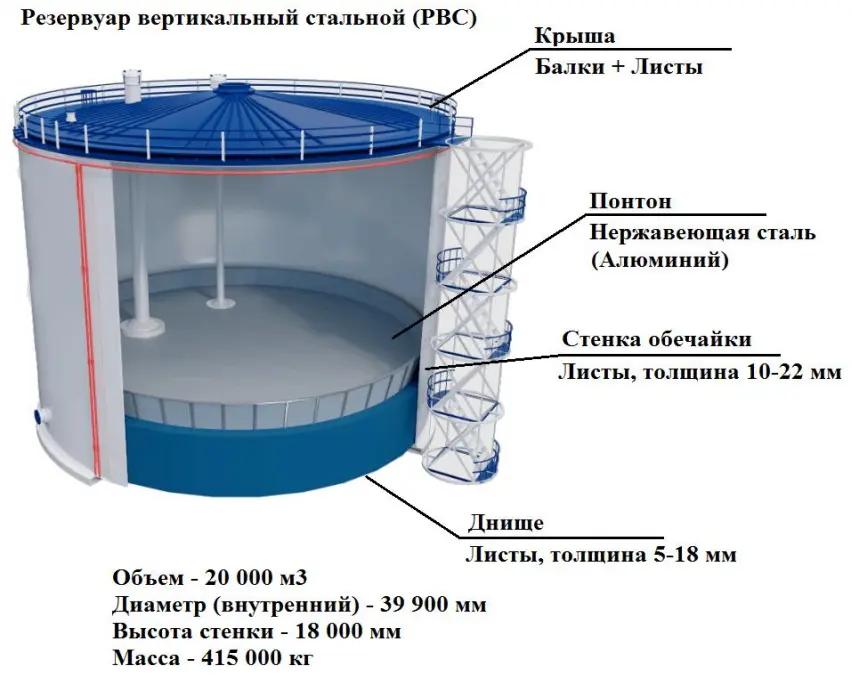
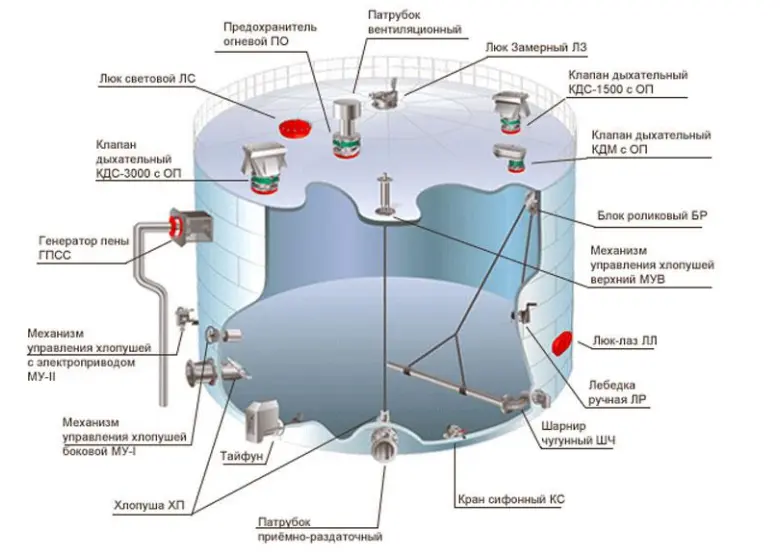
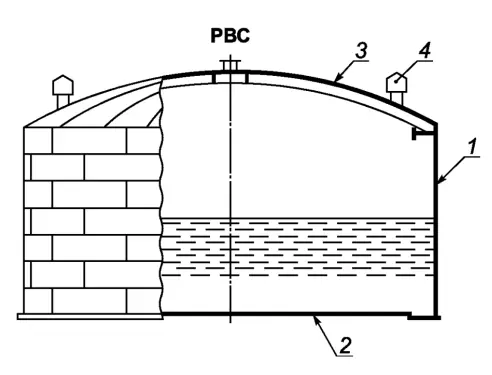
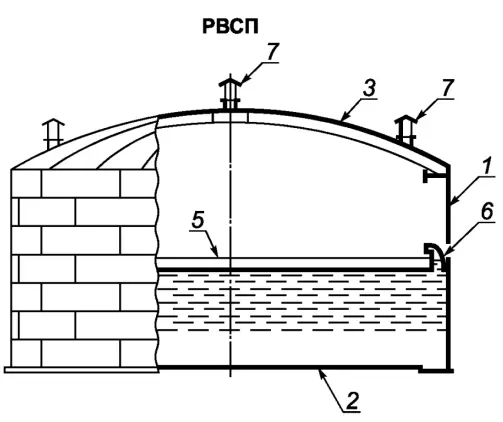
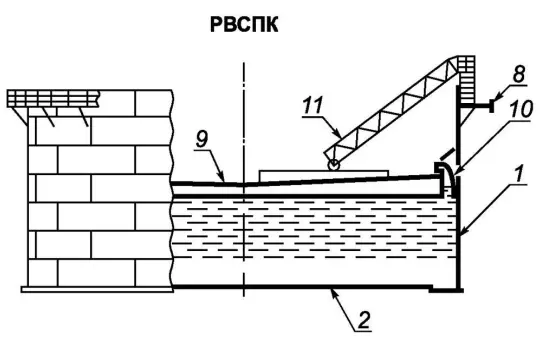
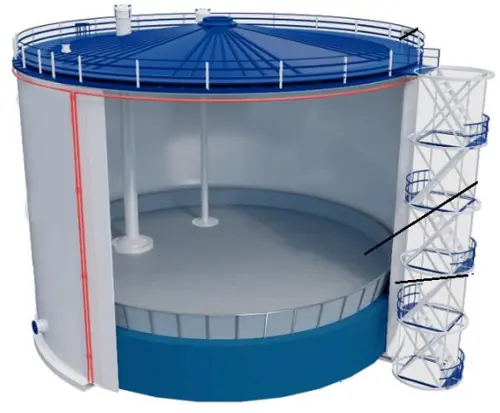
Cylindrical tanks are classified as vertical (RVS) or horizontal (RGS). Vertical steel tanks also vary in equipment: RVSP tanks have an internal floating cover, while RVSPK tanks have a weather-protection shield. A floating cover on the liquid surface reduces evaporation losses and the risk of explosion or fire.
Vertical tank testing
Final hydrostatic testing checks joint tightness and overall structural strength. Fixed-roof tanks without a floating cover are also tested for internal excess pressure and partial vacuum.
| № | Test type | RVS | RVSP | RVSPK |
|---|---|---|---|---|
| 1 | Shell leak test by filling with water | + | + | + |
| 2 | Tank shell strength test under hydrostatic load | + | + | + |
| 3 | Fixed-roof RVS leak test using excess air pressure | + | - | - |
| 4 | Tank shell stability test under internal partial vacuum | + | - | - |
| 5 | Buoyancy and functionality test of the internal cover and floating roof | - | + | + |
| 6 | Rolling ladder functionality test | - | - | + |
| 7 | Foundation stability test measuring total and differential settlement around the bottom perimeter, tank tilt and the profile of the central bottom area | + | + | + |
Installation methods
Tank bottoms and walls are installed using either plate-by-plate assembly or rolled-panel construction. In plate-by-plate construction, structural elements are assembled directly on site without welding machines or lifting construction equipment. With the rolled-panel method, welded sheets for the tank bottom and roof are delivered to site as rolls.
Four roof installation methods
- Framed conical and spherical roofs installed using a central support
- Top-down installation without a central support, for frameless conical and spherical roofs or framed roofs with separate framing and decking
- Installation from inside the tank without a central support, for roofs with separate framing and decking
- Framed spherical roofs assembled inside the tank and then lifted into their final position
Comparison of installation methods for 20,000 m³ steel and aluminium tanks
| Parameter | FSW | Manual arc welding |
|---|---|---|
| Welding speed | 80% | 20% |
| Weld mechanical properties | 90% | 50% |
| Distortion | 20% | 80% |
| Labour requirements | 30% | 100% |
| Defects | 0,1% | 40% |
- Capacity
- Cost efficiency
- Environmental performance
- No residual distortion
- No welding defects
- Better mechanical properties and other benefits
- Steel structure weight: approximately 450 t
- Service life: 30 years
- Twelve shell courses
- Top course thickness: from 10 mm
- Bottom course thickness: from 16 mm
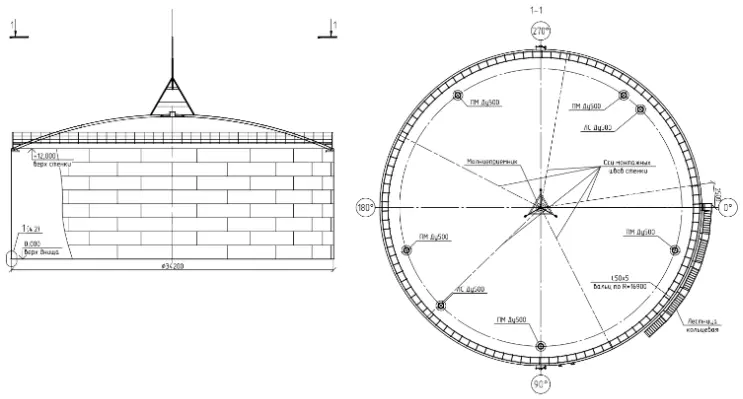
- Spherical roof
Comparison of 20,000 m³ steel and aluminium tanks
| Main structural components | RVS-20000 (steel) | RA-20000 (aluminium profiles) |
|---|---|---|
| Shell | 242 535 kg | 95 105 kg |
| Bottom | 68 852 kg | 23 506 kg |
| Roof | 102 641 kg | 24 275 kg |
| Internal floating cover | 70 330 kg | 32 860 kg |
| Total | 484 358 kg | 175,746 kg (before strength calculations) |