Error
текст ошибки


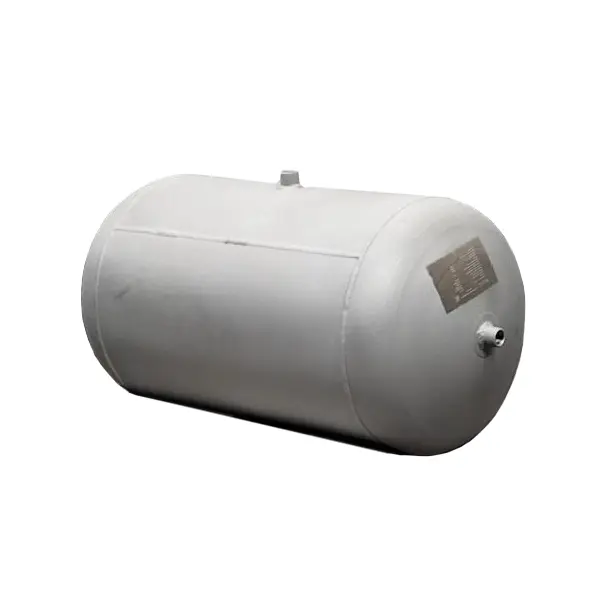
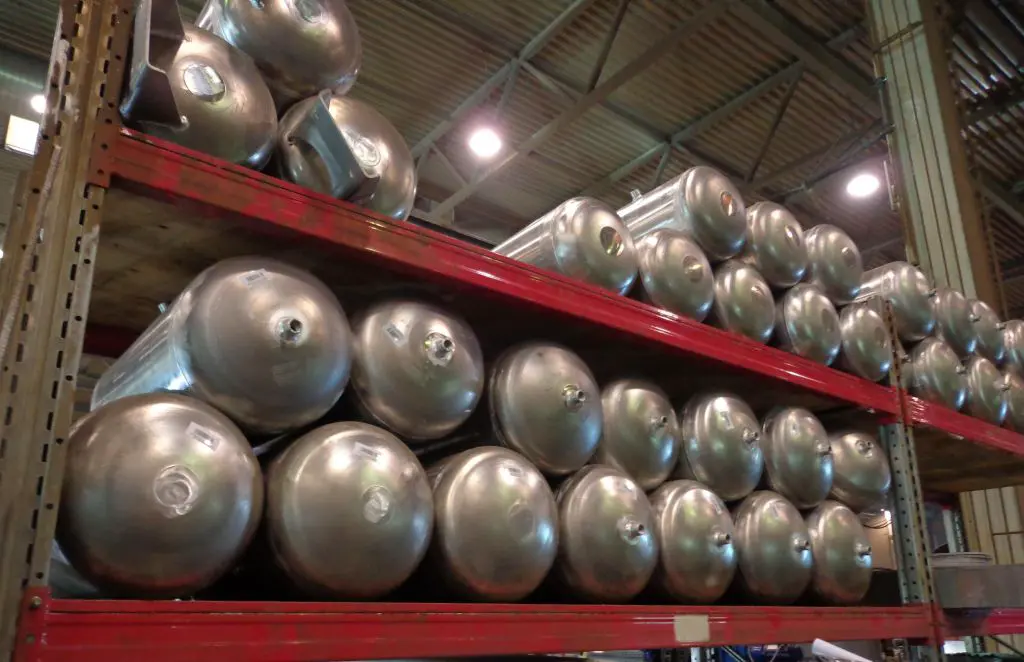
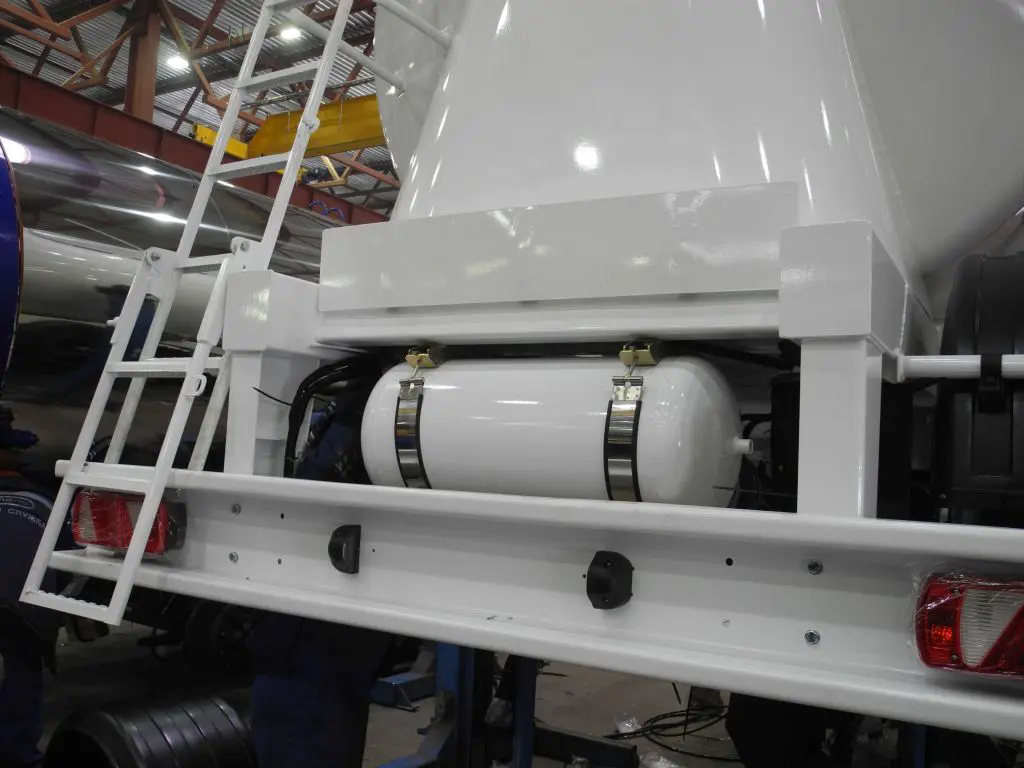
Compressed air receiver
The compressed air receiver stores and supplies air to a vehicle’s pneumatic system. Versions differ in nominal capacity, body diameter and length. Selection takes account of the required air reserve, available installation space and system connections.
About the product
- Nominal volume, l100 / 110 / 120
- Outside diameter, mm396 / 362 / 362
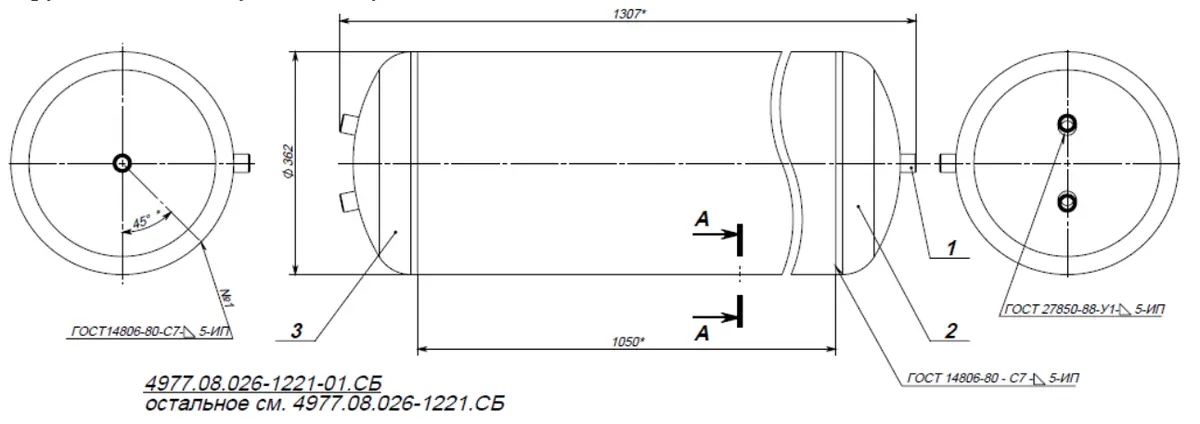
- Length, mm900 / 1227 / 1307
- Operating pressure, MPa1.1
- Test pressure, MPa1.65
- MaterialAMg5* to GOST 21631-76
- Working mediumCompressed air
- Fluid group2
- Equipment hazard category3
- Permissible wall temperature, °C+40/-45
- Design service life, years10
- Design service life, years10
- Specified storage period, months12
- Warranty period, months12
- ManufacturerSespel
Build your specification in the configurator
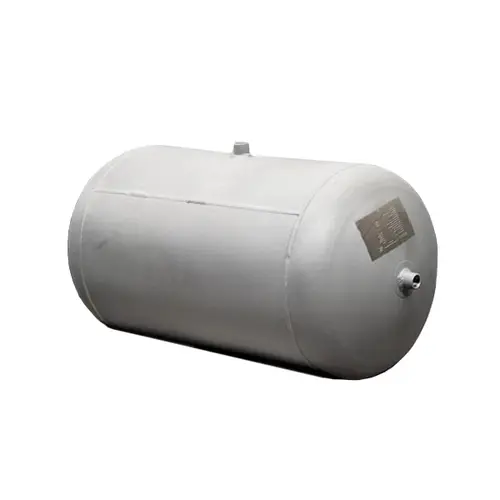 Compressed air receiver
Error
Description
The compressed air receiver stores and supplies air to a vehicle’s pneumatic system. Versions differ in nominal capacity, body diameter and length. Selection takes account of the required air reserve, available installation space and system connections.
The 100-litre version has an outside diameter of 396 mm and a length of 900 mm. Working pressure is 1.1 MPa and test pressure is 1.65 MPa. Test pressure is not an allowable operating condition.
Applications
Used in vehicle systems with pneumatic or air-over-hydraulic actuation. Check the capacity, connection threads, temperature limits and maintenance requirements against the documentation for the specific receiver.
Installation and maintenance
Leave access to the receiver for inspection and maintenance when choosing the installation location. Before connecting it, check capacity, working and test pressures, material and temperature limits against the nameplate and product documentation.
Maintenance includes checking the body, mountings and connections and removing dust and contamination. Follow the manual for the specific version to determine maintenance intervals and tasks. Perform maintenance and repairs only after relieving excess pressure.
Safety precautions
Installation and operation must be carried out by personnel authorised to work with pressure equipment and familiar with the product manual. Secure the receiver properly and connect it correctly to the compressed air system.
Strictly prohibited
- Exceed the allowable working pressure.
- Subject the receiver to impacts or excessive dynamic loads.
- Operate the receiver outside the temperature limits of its version or expose it to aggressive external media.
- Service or repair the receiver while it is pressurised.
| Vessel component name | Body |
|---|---|
| Maximum corrosion/erosion allowance, mm | 0,08 |
| Capacity, m³ | 0.12 |
| Maximum empty vessel weight, kg | 1,72 |
Air storage and system capacity
The receiver stores compressed air for pneumatic consumers. Volume selection depends on their air demand, operating frequency and the compressor’s ability to replenish the supply. Increasing storage volume does not increase compressor output, so receiver size should be assessed against the duty of the complete pneumatic system.
Body dimensions and connection layout
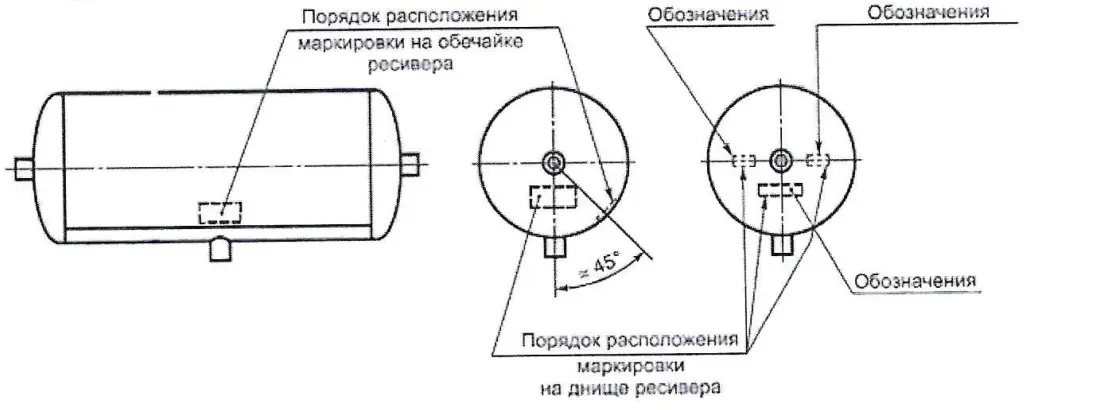
Replacement selection requires both capacity and external dimensions, as well as connection positions relative to the mountings. Use the drawing to check air line routing and access to serviceable components. Data for the 100-litre version must not automatically be applied to other capacities: confirm dimensions and supply scope for the selected version.
Frequently asked questions
Answers to questions about selecting, connecting and operating the product.
How do the 100, 110 and 120 litre versions differ?
They differ in nominal capacity and body dimensions. The 100-litre version is listed with a 396 mm outside diameter and 900 mm length. Check the selected version dimensions and connection positions against its drawing.
Can the 1.65 MPa test pressure be used as working pressure?
No. The listed working pressure is 1.1 MPa. Test pressure is used to verify the vessel and does not authorise operation at higher pressure.
What should be checked before installing the receiver?
Check capacity, dimensions, connections, pressure and temperature limits against the nameplate and documentation. Provide secure mounting and inspection access; relieve pressure before maintenance.