
Sespel shares its robotic welding experience at a conference on technological sovereignty
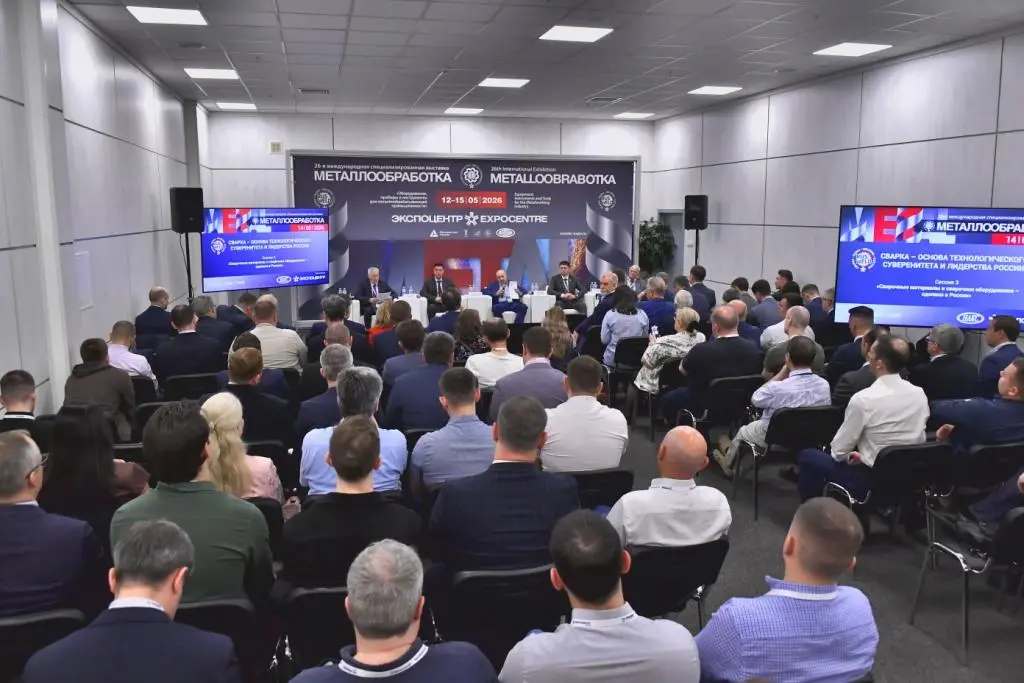
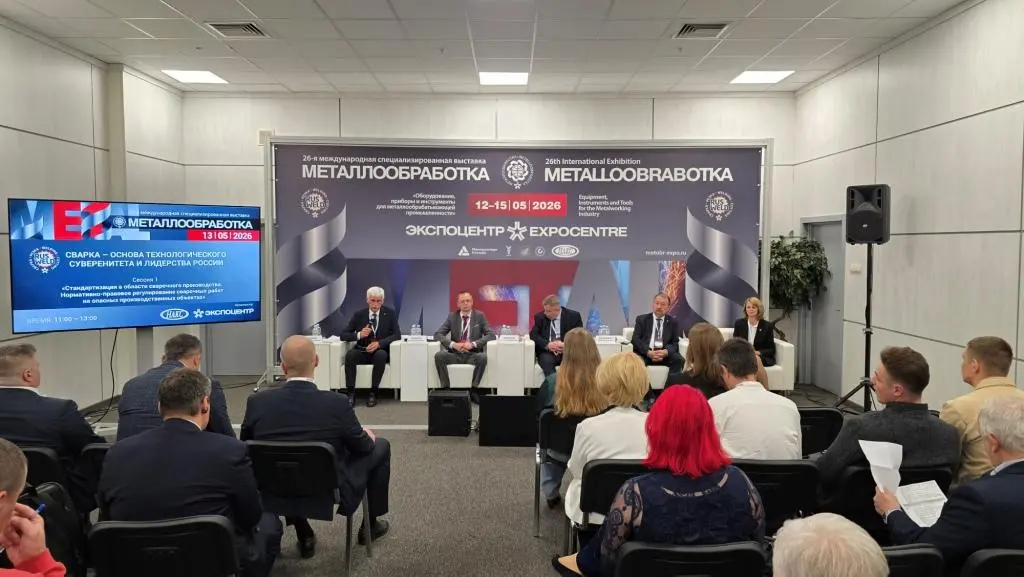
From 12 to 15 May 2026, Moscow hosted the Metalloobrabotka 2026 exhibition and the conference “Welding: the Foundation of Russia’s Technological Sovereignty and Leadership”. Sespel took an active part: Deputy Chief Engineer A. N. Kotelkin presented the company’s experience in robotic and automated welding. Using semi-trailer manufacturing as an example, he showed how comprehensive robotisation doubled output, reduced claims to one-third and automated up to 80% of welds. The conference brought together government representatives, experts and manufacturers to discuss welding’s key role in the country’s technological independence.
From 12 to 15 May 2026, the Crocus Expo exhibition centre in Moscow hosted the annual Metalloobrabotka 2026 trade fair. The event included the conference “Welding: the Foundation of Russia’s Technological Sovereignty and Leadership”, organised with the strategic participation of the NAKS self-regulatory association. It was a major event for metalworking and welding professionals from Russia and the CIS.
The conference focused on the decisive role of welding in achieving technological independence. Participants from government, expert and research organisations, and equipment and material manufacturers discussed a wide range of issues, from regulatory changes to workforce training and standardisation.
The session on automation and robotics attracted particular interest. Sespel Deputy Chief Engineer Andrey Nikolayevich Kotelkin gave a detailed account of the company’s progress: from entirely manual welding in 2004 to robotic systems (РТК-1, МАКС, РТК-12С, М.А.К.С.), laser seam tracking, hybrid laser-arc systems and friction stir welding equipment. Today, Sespel is Russia’s only manufacturer offering a full range of tankers and semi-trailers, with more than 800 models and capacities of up to 89 m³. Welding automation has been a key factor in its leading position.
Kotelkin presented specific results from introducing robotics into semi-trailer production: productivity doubled without increasing headcount, claims fell to one-third of their previous level, up to 80% of all welds were automated, and the production cycle shortened from a month to three weeks. Robots also improved working conditions, attracted talented young people to the plant and dispelled misconceptions about the complexity of such projects.
Other conference sessions featured speakers from the Ministry of Industry and Trade, Rostekhnadzor, the National Agency for Qualifications Development and leading industry institutes. Discussions covered standardisation, workforce training and the establishment of the international BRICS Welding Institute union.
Participation enabled Sespel to present its achievements, strengthen business relationships and exchange views on the industry’s key challenges. The event reaffirmed the strategic importance of welding technologies in strengthening Russia’s industrial capabilities and technological sovereignty.